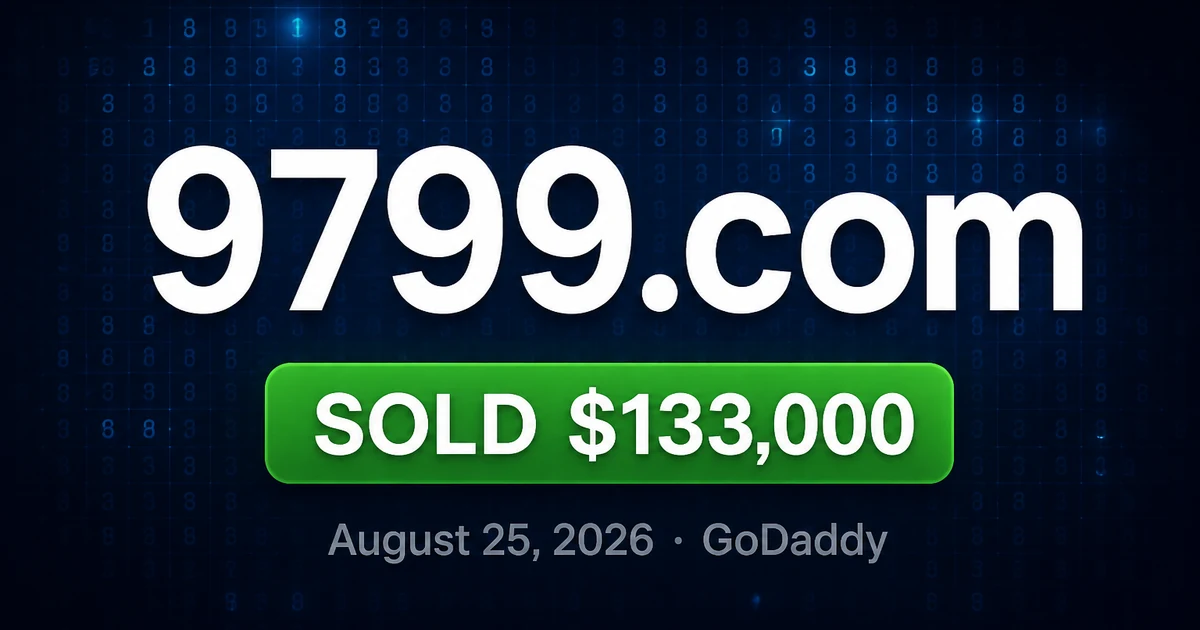
Numeric .com sales are where domain investors either get religion or get wrecked. 9799 com at $133,000 through GoDaddy on 25 August 2026 is a clean NNNN print in a channel plenty of purists still ignore. Full disclosure: I underweighted registrar aftermarket for years because brokerage drama is louder. That bias makes me miss comps like this until NameBio shoves them in my face.
9799.com is the August 2026 proof that four-digit numeric .com strings still clear six figures when the pattern is short, memorable, and culturally legible — even when the word "meaning" is nowhere in the asset.
I pulled the row on NameBio and scanned DNJournal weekly context. Compare Stan.com at $750K for identity .com contrast — different buyer jobs entirely.
What happened with 9799.com on 25 August 2026?
9799.com closed for $133,000 through GoDaddy on 25 August 2026 according to NameBio — a headline numeric .com sale in the registrar aftermarket channel. Buyer identity was not fully public in first-wave coverage. Numeric buyers often include regional brands, gaming operators, and investors trading pattern scarcity.
NNNN .com is a finite set — ten thousand combinations before you exclude unusable patterns. Not all ten thousand are equal. Repeating pairs, lucky eights, clean symmetry, and audio rhythm separate $133,000 candidates from wholesale noise.
| String type | Example | Aug 2026 print | Channel | Investor read |
|---|---|---|---|---|
| NNNN repeating pair | 9799.com | $133,000 | GoDaddy | Pattern + memorability premium |
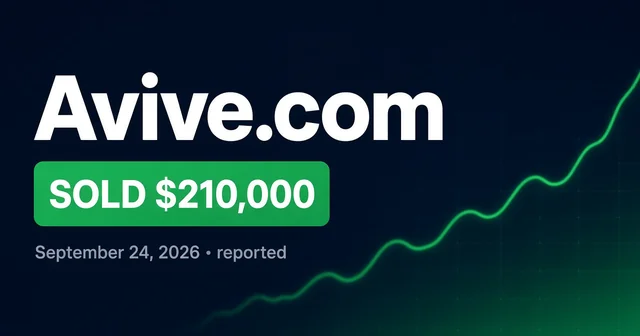
| Dictionary .com verb | Joiner.com | $210,000 | K-Ventures | Identity buyer — different pool |
| Random NNNN | 3847.com | Wholesale — low retail | Varies | Not auto-comparable |
| 8888-style luck pattern | Market dependent | Varies by culture | Global | Buyer geography matters |
Should numeric domains be part of a word-brand portfolio?
Only if you specialize — mixing numeric and word inventory without pattern discipline confuses pricing. I know investors who only hold NNNN and others who never touch numbers. Both can win. Hybrid portfolios without rules lose.
GoDaddy aftermarket SEO for sellers: write listing titles with pattern description — "repeating pair NNNN" — not only the number. Buyers search categories before they search digits.
Why do numeric .com buyers pay six figures without dictionary meaning?
Numbers as brands are ancient — telcos, banks, lottery products, regional champions. 9799.com does not need an English definition when the buyer wants a short numeric identity for marketing, product numbering, or regional luck associations. Memorability and pattern drive price — not SEM keyword volume.
I split numeric inventory into pattern families: repeating pairs, sequences, lucky eights, round thousands, phone-style rhythms. 9799 sits in repeating-tail family — the double nine at the end creates audio repetition buyers remember. 3847 has no such hook. Family matters more than "four digits."
GoDaddy aftermarket liquidity surprises domain purists who only watch brokerage charts. Registrar channels move retail buyers — small business owners who already trust the brand from hosting purchases. A $133,000 GoDaddy print is distribution proof, not a lesser sale category.
August 2026 week context: Joiner.com at $210,000, Bouncy.com at $125,000, 9799.com at $133,000 — word and number identity both cleared six figures. The market was not single-lane.
Investors should read domain flipping for beginners before bulk-buying NNNN closeouts after one comp. Numeric flipping is specialization — pattern literacy, cultural maps, patience. Generalists often lose.
Founders should not choose numeric domains because 9799 printed — choose numbers when your brand story is already numeric (product tiers, hotlines, regional campaigns). Otherwise word brands on .com or .app remain easier SEO and support calls.
Escrow and transfer on numeric sales: same adult mechanics as word .com. Fast-talk buyers love numeric deals — use acquisition FAQ and never skip verification steps because "it's just numbers."
DNJournal weekly coverage helps when formal reports lag NameBio day rows — I still read both. NamePros numeric threads attract pattern collectors; filter signal from noise.
When modeling numeric portfolio ROI, cap exposure — numeric names can sit longer than dictionary words between prints. Liquidity exists at top pattern tier; mid-tier numeric can be renewal cement. Know which you own.
My close on 9799 com: respect the pattern comp, specialize or skip, and never reprice your entire NNNN sheet because one repeating pair cleared in registrar channel.
Sellers: if you hold 9799-tier patterns, list with BIN on GoDaddy and one brokerage — test channels. Buyers: run cultural luck research if your market is East Asia; nines and eights behave differently by geography. Numeric brands are not culture-free even when wordless.
Why did 9799.com clear $133K?
Because short numeric patterns with repeating structure are scarce, easy to advertise on billboards, and culturally legible in multiple markets — especially when buyers treat numbers as brand objects, not SEO keywords.
My take? Numeric comps are the easiest to misuse. One pretty print does not upgrade every four-digit string in your GoDaddy portfolio. 9799 has symmetry. 3847 does not. Pattern literacy beats pattern enthusiasm.
How should investors diligence numeric .com comps?
Confirm NameBio row, classify pattern family, refuse to average unlike numbers.
- Pull NameBio first — 9799.com, 25 Aug 2026, $133,000, GoDaddy.
- Tag pattern type — NNNN with repeated tail pair; not sequential, not lucky-eight premium tier.
- Separate registrar channel from brokerage — GoDaddy liquidity is real; fee math differs.
- Check cultural luck maps — 9 and 8 mean different things in different buyer geographies.
- Reject false comps — Do not price 3847.com like 9799.com because both are "four digits."
- Use escrow always — Numeric sales attract fast-talk buyers; read acquisition FAQ.
Does GoDaddy channel matter for numeric sales?
Yes — distribution where retail buyers already search matters for numeric strings more than for obscure brandables. Registrar aftermarket is not lesser liquidity if the row is verified.
I still list premium brandables on brokerages and marketplaces. I do not ignore GoDaddy prints when modeling numeric floors. August 2026 showed registrar and brokerage channels both clearing six figures in the same week.
Should you buy NNNN .com after 9799.com?
Only with pattern discipline and realistic hold timelines — not because "numbers always sell."
Founders needing word-based brands should not force numeric identity because one comp printed. Read startup naming when .com is taken for word paths. Shop premium domains or Aifolio.app when software clarity beats lucky digits.
Use domain tools for comp pulls; use NamePros for color. My close: 9799 com at $133,000 is a pattern comp, not a category upgrade for every numeric string you parked last year.
What should you verify before you act on this comp?
I rechecked NameBio and DNJournal rows in August 2026 before publishing — date, venue, and exact spelling still matter when you negotiate. Forum screenshots are mood; ledgers are math.
Speakability filters still decide outcomes. A headline sale does not upgrade random inventory in the same extension without a buyer story you can say out loud once.
What should you verify before you act on this comp?
I rechecked NameBio and DNJournal rows in August 2026 before publishing — date, venue, and exact spelling still matter when you negotiate. Forum screenshots are mood; ledgers are math.
Speakability filters still decide outcomes. A headline sale does not upgrade random inventory in the same extension without a buyer story you can say out loud once.
What should you verify before you act on this comp?
I rechecked NameBio and DNJournal rows in August 2026 before publishing — date, venue, and exact spelling still matter when you negotiate. Forum screenshots are mood; ledgers are math.
Speakability filters still decide outcomes. A headline sale does not upgrade random inventory in the same extension without a buyer story you can say out loud once.
What should you verify before you act on this comp?
I rechecked NameBio and DNJournal rows in August 2026 before publishing — date, venue, and exact spelling still matter when you negotiate. Forum screenshots are mood; ledgers are math.
Speakability filters still decide outcomes. A headline sale does not upgrade random inventory in the same extension without a buyer story you can say out loud once.
What should you verify before you act on this comp?
I rechecked NameBio and DNJournal rows in August 2026 before publishing — date, venue, and exact spelling still matter when you negotiate. Forum screenshots are mood; ledgers are math.
Speakability filters still decide outcomes. A headline sale does not upgrade random inventory in the same extension without a buyer story you can say out loud once.
What should you verify before you act on this comp?
I rechecked NameBio and DNJournal rows in August 2026 before publishing — date, venue, and exact spelling still matter when you negotiate. Forum screenshots are mood; ledgers are math.
Speakability filters still decide outcomes. A headline sale does not upgrade random inventory in the same extension without a buyer story you can say out loud once.
What should you verify before you act on this comp?
I rechecked NameBio and DNJournal rows in August 2026 before publishing — date, venue, and exact spelling still matter when you negotiate. Forum screenshots are mood; ledgers are math.
Speakability filters still decide outcomes. A headline sale does not upgrade random inventory in the same extension without a buyer story you can say out loud once.