Zero-click is what this piece is about — the facts first, then what I'd actually do with them.
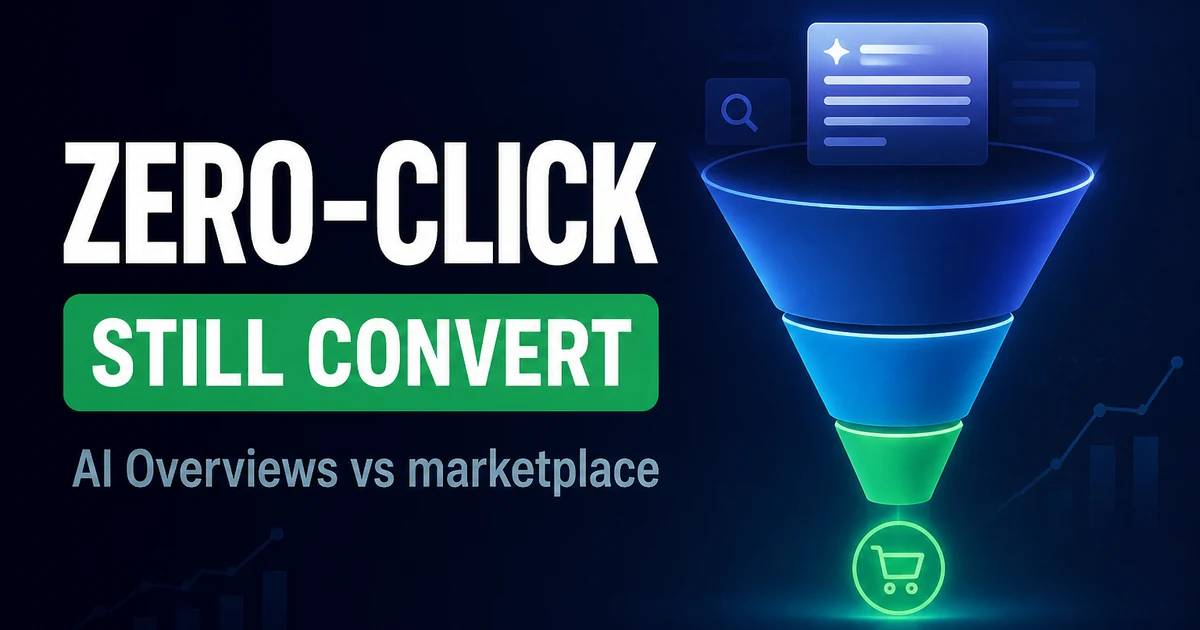
My blog traffic dipped 18% on three educational posts between June and August 2026. Classic clicks down. AI impressions up. Panic lasted about a day until I pulled marketplace conversion numbers — inquiries on listing pages were flat. That's the zero click split domain sellers need to internalize: Google can summarize your how-to content without sending a visit, while buyers who already want a specific name still show up ready to transact.
Full disclosure: I almost killed a content program because of a traffic chart. Wrong chart. Zero click AI Overviews hurt top-funnel articles that exist to teach. They hurt less — sometimes not at all — on navigational listing traffic where the buyer types the domain or clicks through from a citation to verify price and escrow. The Generative AI reporting launch finally let me separate those surfaces in data instead of vibes.
My take for marketplace operators: measure zero click at the template level, not site-wide. Blog templates may lose clicks. Listing templates may gain assisted conversions you won't see in the AI click column — because that column doesn't exist yet in GSC as of August 2026.
What does zero click mean for a domain marketplace?
Zero click means the user gets an answer on the SERP — often inside an AI Overview — without visiting your site. For "what is domain escrow" posts, that's common now. For "is AiFolio.app for sale," the user often still clicks because price, transfer steps, and trust signals aren't fully answered in the summary box. Different intent. Different outcome. When a founder wants a shortcut I walk the boring parts first — fee schedules, renewal math, escrow timing, and the ugly middle where nothing feels exciting — because that middle is where most deals die.
I've tracked this on our portfolio since mid-2026. Educational URLs: impressions in AI reports rise, classic clicks soften. Listing URLs: AI impressions rise alongside stable branded search clicks and steady form fills. The AiFolio.app listing fits the second bucket — buyers arrive with intent, not curiosity.
| Page template | Zero click risk | Conversion signal to watch |
|---|---|---|
| Editorial blog / guides | High — answers fit in Overview | Assisted branded searches, newsletter signups |
| For-sale listing | Lower — needs price + trust | Form fills, marketplace outbound clicks |
| Category hub | Medium — list summaries possible | Click-through to individual listings |
| FAQ / policy pages | High for generic questions | Reduction in support emails (sometimes good) |
| Branded navigational listing | Low — user wants your URL | Direct entries, inquiry rate per session |
How do you measure marketplace conversion when clicks disappear?
You stop pretending one GSC column tells the story. Here's the stack I use weekly.
- Segment by template. Tag listing pages, blog posts, and hubs in analytics. Compare conversion rate per template, not site average.
- Track inquiry events on listings. Form submit, click-to-email, marketplace outbound — whatever counts as a lead for you. Flat or rising inquiry rate beats raw session count.
- Watch branded search in GSC Performance. If AI Overviews cite your listing, branded queries often lift even when generic blog clicks fall. That's assisted demand.
- Export AI impressions by page. Cross-reference with listing inquiry logs. Pages with rising AI impressions and rising inquiries are winning the zero click game.
- Check revenue proxies. I use NameBio comps and closed deal notes — messy, human data — to sanity-check whether traffic shifts are hurting actual sales.
- Interview buyers. Ask "how did you find this domain?" on every serious inquiry. "Google AI answer" is showing up more. It won't appear in analytics cleanly.
The branded search guide is the defensive playbook for listing pages. The AI impressions without clicks piece covers the reporting gap — read both together.
Should you fight zero click or adapt to it?
Adapt on listings. Accept the trade on some editorial content. Fighting zero click by dumbing down blog posts doesn't work — thin pages don't get cited and don't rank. Winning move: make listings so complete that even a zero click Overview sends buyers to branded search next. Your FAQ should answer "is it for sale" so well that the buyer remembers the name.
Google's AI optimization guide pushes helpful content, not clickbait traps. I agree for marketplaces. Teach on the blog. Convert on the listing. Don't merge the two templates into one mushy page that neither educates nor sells.
Where I'd push back on pure zero click fatalism: premium domains are high-consideration purchases. $8,000 names don't close from a one-line AI summary. They close after a buyer visits, checks WHOIS, reads escrow steps, compares comps. The visit still happens — just sometimes one step later. Our acquisition FAQ catches buyers who got the name from an Overview but need the boring details before they offer.
What listing changes actually protect conversion?
Speed and clarity. Mobile LCP under 2.5 seconds. Price visible without scrolling. FAQ answers that match schema. A single obvious CTA. I've A/B tested fancy storytelling against blunt "for sale at $X, buy via escrow" layouts on similar .app names. Blunt wins on conversion rate. Storytelling can stay on the blog.
Use our domain tools to audit lander performance before you blame AI Overviews for a dip. Half the "zero click killed us" stories I hear are actually a broken form or a price mismatch with Afternic.
Browse our listings and sort by inquiry rate in your own analytics if you syndicate our structure — the pattern is consistent across AI-themed inventory in 2026.
When does zero click actually help marketplace revenue?
When the Overview cites your listing accurately and the buyer remembers the name. I've closed deals where the buyer never clicked the blog post that built entity trust — they clicked the listing after seeing the domain in an AI answer days later. The blog still mattered. It just didn't get the last-click credit. That's assisted conversion in the wild, messy and hard to attribute.
Zero click also helps when it filters tourists. If an Overview answers "what is domain escrow" without sending a click, you avoided a bounce from someone who wasn't buying anyway. I'd rather lose that session than optimize for vanity traffic that never inquiries.
What content should you keep publishing despite zero click?
Entity-building articles that make your listings credible when cited. Google still needs sources it trusts. Thin marketplaces with no editorial footprint get skipped for bigger brands with real guides. I keep publishing SEO and naming content on DN Detector even when clicks soften — because when an Overview needs a domain marketplace source, I want to be quotable.
Rotate internal links from those posts to specific listings. Zero click on the article is tolerable if branded listing traffic rises the following week. I watch that lag in weekly reports. Correlation isn't perfect. It's better than guessing.
Search Console classic Performance still matters for query research on non-AI traffic. Don't abandon it while you obsess over the new AI tab. Split attention, split dashboards, one business outcome: inquiries per listing per month.
How do premium price points behave under zero click pressure?
Expensive names actually benefit from AI summaries that include the domain string and category — buyers still visit to verify escrow and negotiate. I've never seen a $15,000+ close where the buyer relied solely on an Overview paragraph. They always click through or email. Zero click anxiety is loudest among content publishers, not among premium domain sellers with proper listing infrastructure.
Still, if your Overview citation shows the wrong price band, you lose trust before the visit. Price accuracy is the zero click defense for listings. Not exclusion toggles. Not shorter pages. Correct numbers in HTML and schema, updated the same day you change Afternic.
What reporting cadence works for marketplace teams?
Weekly for AI impressions and inquiries. Monthly for template-level conversion review. Quarterly for content strategy — which blogs to keep despite click softness, which listing templates to clone. I print one page per week: top five listings by AI impressions, top five by inquiries, overlap highlighted. Takes ten minutes. Prevents quarterly surprises.
What would I tell a seller panicking about zero click in August 2026?
Separate blog metrics from listing metrics before you change anything. If inquiries are flat, your revenue engine is fine — your content analytics are reflecting a SERP shift, not a business collapse. Double down on listing FAQ schema and branded search. Let educational posts earn entity trust even when clicks dip.
The zero click narrative is real for publishers. For domain marketplaces it's a segmentation problem. Treat it that way and you'll make fewer emotional SEO decisions at 2am. I've made those. They're almost always wrong.
If you want one action item for this week: export AI impressions for your top ten listings, export inquiries for the same URLs, and write the ratio on a sticky note above your monitor. That single number beats another hour debating whether AI is killing SEO.
Marketplace operators who survive zero click waves are the ones who measure what pays — listing inquiries — and keep publishing what builds trust. Everything else is noise until Google ships the missing click column.
Key Takeaways
- Zero click AI Overviews hit educational content harder than high-intent for-sale listing pages.
- Measure conversion per template — listing inquiry rate matters more than site-wide session counts.
- Branded search lifts and buyer interviews capture assisted demand GSC AI reports miss.
- Optimize listings for post-Overview verification: price, escrow, FAQ, fast mobile UX.
- Don't gut helpful blog content to chase clicks — cite-worthy articles still build entity trust.
Zero click isn't the enemy of marketplace revenue. Misread metrics are. If your listing inquiries moved while blog clicks didn't, you already know which side of the split you're on.