A fragrance company just tried to reverse-hijack two domains from Procter & Gamble — and lost badly enough that the panel called it reverse domain name hijacking. I've watched UDRP complainants swing at legacy .coms for years. This one is cleaner than most because the timeline does all the work. No conspiracy theory required — the calendar does the heavy lifting.
Domain Name Wire reported that Red Matter Holdings Inc. — doing business as MiN NEW YORK — filed against ScentStories.com and ScentStory.com. P&G registered those names in 2004 for a Febreze product that "played" scent disks. The product died in 2008. The complainant didn't exist when the domains were registered. Still filed. Still argued bad-faith renewal. Panelist Scott Blackmer wasn't buying it.
Full disclosure: I'm not a trademark lawyer. I buy and sell domains and I hate waking up to UDRP emails. If you own names with real history, this case is a reminder that registration date still matters more than a latecomer's brand story. Keep your proof. Sleep better when the paper trail is boring and complete.
What did the ScentStories UDRP actually decide?
Blackmer found the domains weren't registered and used in bad faith. Then he went further and tagged the complaint as an attempt at reverse domain name hijacking — even though the complainant was self-represented. That last bit matters. RDNH isn't only for Fortune 500 counsel who should know better. Self-reps who ignore timing can still get the label.
DNW quotes the panel noting the complaint admitted the domains pre-dated the complainant's trademark applications by many years, cited no real authority for waving that problem away, and alleged ignored outreach that the respondent denied — with no proof attached. I've seen that pattern. "We emailed them" without evidence is not a strategy. It's hope with a PDF cover sheet.
For owners, the practical lesson is boring and valuable: document first use, renewals, and any product history. Corporate brands do this instinctively. Solo investors often don't. Fix that before you need WIPO to care.
Why does reverse domain name hijacking keep showing up in 2026?
Two messy reasons. First, founders treat UDRP like Plan B after a failed buy. Second, complainants underestimate how hard "registration in bad faith" is when the name predates their company.
Same month, DNW covered another RDNH pattern in the Glide.ai case — offer first, UDRP second when the seller won't play. I already unpacked that reflex in our Glide reverse hijacking lesson. ScentStories is the cousin case: brand narrative without temporal priority.
UDRP filings are up this year. I covered the broader spike in the UDRP buyer defense checklist. More cases means more owners who did nothing wrong still need a response plan. Don't wait for the complaint to invent your filing cabinet.
| RDNH red flag | What it usually means | Owner move |
|---|---|---|
| Complainant formed after your registration | Timing problem for bad-faith-at-registration | Lead with registration proof in the response |
| "Renewal = new bad faith" theory | Often a stretch without trademark-targeting proof | Show ordinary renewals + legacy use history |
| Alleged ignored outreach, no exhibits | Story without evidence | Deny cleanly; demand proof |
| Offer then UDRP | Plan B negotiation abuse pattern | Preserve broker emails; cite offer history |
| Complaint cites cases selectively | Credibility hit with panel | Call out omissions in response |
What should domain owners do before a UDRP arrives?
Build a proof file now — registration dates, use history, and offer emails — before any complaint hits your inbox.
- Export WHOIS history and registrar creation dates for every premium name you hold.
- Save product screenshots, press, and invoices that prove legitimate use — even discontinued use.
- Centralize broker and buyer emails. Offers matter when complainants pretend they never negotiated.
- Know which names sit near famous marks. Those need higher diligence, not panic selling.
- Budget a response lawyer before you're on a seven-day clock. Panic pricing for counsel is how bad responses get filed.
- Read ICANN UDRP basics once so the acronyms don't freeze you.
- Use domain tools to spot trademark-adjacent strings before you overpay at auction.
My take? Most investors obsess over comps and ignore defense files. Comps make you money. Defense files keep the money.
Is reverse domain name hijacking a win you can cash?
Not really. RDNH is a finding, not a paycheck, in standard UDRP. It stains the complainant and helps the next panel see a pattern. It does not automatically wire you damages. Don't celebrate like you won a civil verdict. You kept your domain. That was the job.
Still worth fighting for the finding when facts support it. Future complainants read. Brokers read. Your insurer — if you have one — reads. A clean RDNH record on a frivolous case is reputation capital.
What if I'm the founder who wants a name someone else registered years ago?
Buy it. Or brand around it. Or pick a different string. Do not invent a UDRP theory because your fragrance line "needs" ScentStories.com and a giant registered it for a dead product line in 2004. Dead product lines still create registration priority. Panels know that.
If you're hunting operable brands instead of fighting giants, browse the premium domain marketplace. Category-forward names like BaseReactor.com are built to ship on — not to litigate over. The buyer FAQ covers escrow so you acquire cleanly instead of filing angry PDFs.
Honestly, I almost rooted for underdogs until I watched enough "Plan B" complaints torch goodwill. Timing isn't a technicality. It's the case.
How should investors read reverse domain name hijacking findings?
Read them as pattern recognition, not lottery tickets. Reverse domain name hijacking means the panel thought the complainant abused process. It does not mean you collect damages in the UDRP itself. I've watched owners celebrate RDNH like a civil win. Then they ask where the check is. There isn't one in the UDRP mailbox, and that surprises people every time.
Still, reverse domain name hijacking findings matter in the next case. Panels remember serial complainants. Brokers warn clients. If you hold trademark-adjacent inventory, a public RDNH in your category is free education. Screenshot it. File it next to your WHOIS exports.
My honest caveat: some complainants still file anyway. Deterrence is incomplete. Defense readiness beats wishful thinking every time.
What proof actually helps in a response?
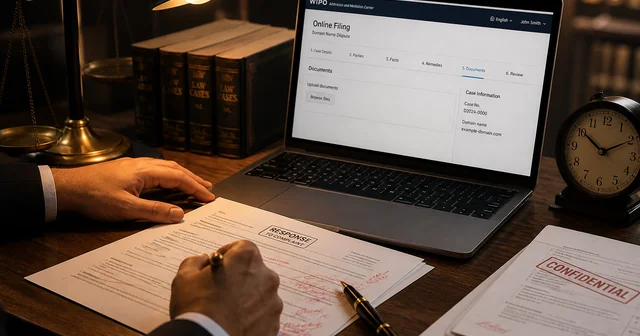
Creation date. Continuous renewals. Archived product pages. Press mentions. Trademark filings that post-date your registration. Broker threads showing purchase offers. That's the stack. Fancy rhetoric is optional.
For ScentStories specifically, P&G had a real 2004 product story. You may not have a Fortune 500 archive. You still need something better than "I liked the name." If you developed the domain even lightly — a landing page, an email, a pitch deck — keep those files offline and in cloud backup. I've lost screenshots to dead hosts. Don't trust a single host to keep your exhibits forever.
When a complaint arrives, answer on time. Default is how domains die. Pair this with the broader spike checklist and you'll spend less time panicking and more time attaching exhibits.
If you're acquiring names near fragrance, CPG, or brandable scent metaphors, run clearance before you wire. Reverse domain name hijacking cases are downstream. Upstream diligence is cheaper. I've repeated that line to friends who wanted to "just file." Filing is not diligence.
One more practical note: reverse domain name hijacking labels do not replace insurance, counsel, or calm timelines. They help the record. Your job is still to keep the name through a complete response. Boring wins more often than clever filings.
I've also started keeping a one-page "if UDRP arrives" note for every five-figure name: counsel contact, registrar lock status, and a folder path to exhibits. Takes ten minutes. Saves a weekend later. Reverse domain name hijacking coverage in the press is useful, but your private binder is what you actually file.
Founders who feel tempted to weaponize UDRP after an ignored offer should read the Glide pattern twice. Offer history becomes evidence. Panels notice. Reverse domain name hijacking findings follow. Buy the name or move on — those remain the adult options in 2026.
If you only remember one line from the ScentStories fight, remember this: reverse domain name hijacking thrives when complainants skip timing homework. Your job as an owner is to make that homework impossible to fake against you.
Keep your dates. Keep your screenshots. Keep your cool. Reverse domain name hijacking thrives on complainants who skip that homework — and panels are still willing to say so out loud.