A broker I follow mentioned something last month that stopped me mid-scroll. Of his last six domain sales, five closed as lease-to-own deals. Five of six. Not because cash buyers weren't available. Because his sellers chose LTO over cash. That's not a market that occasionally offers installment options. That's a structural shift — and I think most buyers and sellers still haven't caught up to what it means. Most haven't.
Domain Name Wire has been tracking the LTO trend closely, and the pattern shows up across the aftermarket: lease-to-own is no longer a niche accommodation for cash-poor buyers. It's becoming the default deal structure at multiple price points. I want to explain why that happened, what it actually means in practice, and — honestly — where the risks live for both sides of the transaction.
I've done deals both ways. I've watched cash sales close fast and clean. Fast and clean. I've also watched installment agreements drag out, go quiet, and eventually need a lawyer. The format isn't automatically better or worse than cash. Not automatically. The format is a tool, and like any tool, it rewards the people who understand it.
Why lease-to-own went from niche to mainstream
Three messy reasons, none of them particularly elegant.
First: buyer cost of capital went up. When interest rates rose and stayed elevated, writing a single check for $25,000 became a harder internal conversation at a startup. Hard conversation. Finance teams started asking questions. CEOs started looking for structures that kept cash on the balance sheet longer. LTO gave them a path to get the domain they wanted without a single painful outlay.
Second: sellers got more sophisticated. The domain aftermarket spent years educating itself on payment plans, and by 2025 most serious sellers had seen enough LTO deals to know the mechanics. Platforms like Afternic built LTO infrastructure directly into their listings. Sellers didn't have to invent the wheel anymore — they just had to decide whether to check the box. Check the box.
Third: the cash sale alternative got harder. Premium domain buyers in 2026 are more patient, more comparison-prone, and more willing to wait for the right structure. If a seller needs to choose between a cash offer that takes three months to close, a ghosted negotiation, or an LTO that closes in two weeks — the LTO starts looking good fast. Looking good. I wrote more about why cash deals are taking longer in our domain hold rates analysis.
So the surge isn't one thing. Not one thing. It's the product of rate pressure, platform infrastructure, and market patience all pointing in the same direction at once.
How lease-to-own actually works in a domain deal
The mechanics matter more than most buyers realize when they're nodding yes to the offer.
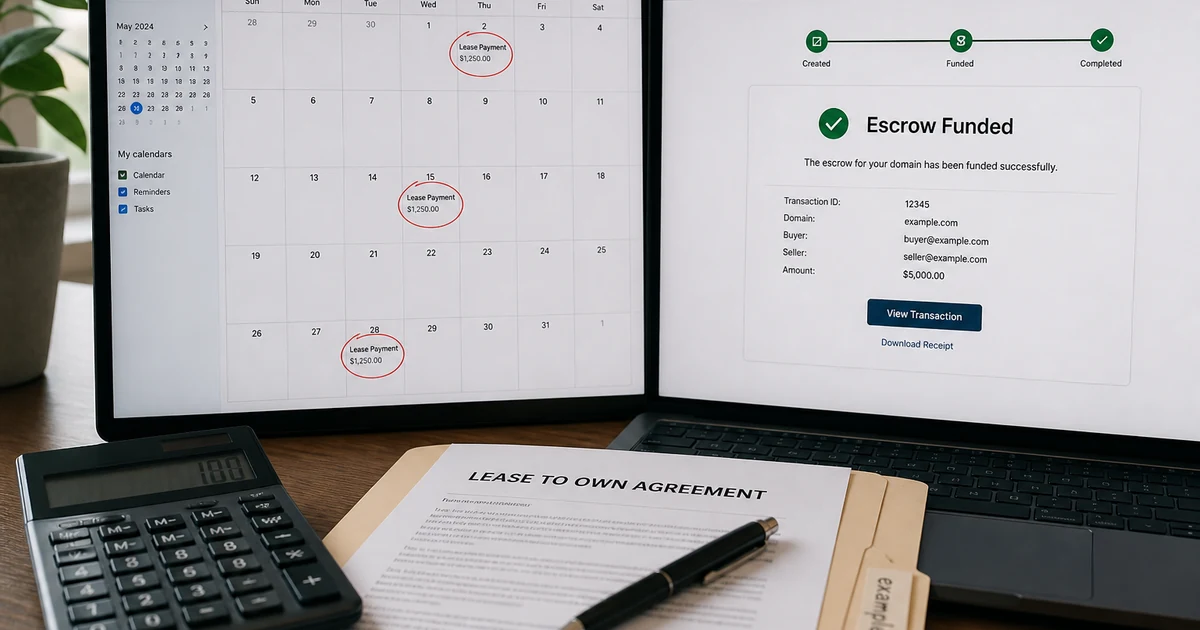
In a typical LTO structure, the buyer makes monthly payments over 12 to 36 months. The domain usually stays in the seller's registrar account — or in an escrow hold — until the final payment clears. The buyer gets DNS control (meaning they can point the domain wherever they want) but doesn't hold the actual registrar auth codes until the purchase is complete.
That DNS-control-but-not-ownership structure is where most confusion lives. The buyer can build a product on the domain. They can launch a website, run email, and tell investors they have the name. Looks owned. But if payments stop, the domain returns to the seller. Period. I've seen founders not understand this until month 18 of a 24-month plan — at which point the stakes feel very real.
For sellers, the core trade is: higher effective price versus payment default risk. Higher price. Real risk. Most LTO structures include a premium — the total installment price is higher than a cash sale would have been. In exchange, the seller accepts the possibility that the buyer stops paying somewhere in the middle.
Our domain installment deals guide goes deep on the mechanics, pricing premiums, and what a well-structured LTO agreement should include. Worth reading before you sign anything.
What's the real risk for sellers, and is it being managed?
Default risk is real and it's not evenly distributed. Not evenly.
The higher the total price and the longer the payment term, the more exposure a seller carries. A 36-month plan on a $40,000 domain is a very different risk profile than a 12-month plan on a $6,000 name. Both are LTO deals. The downside scenario looks completely different.
I've watched sellers take back domains at month 20 of a 24-month plan. The domain comes back, but so does 20 months of market time lost. Time lost. The buyer built something on it. There may be backlinks, server associations, and a brand that now needs untangling from a name you're trying to resell. It's not catastrophic — but it's not clean either. Not clean.
What smart sellers do: require a meaningful deposit upfront (10–20% of the total), use a proper escrow service for every payment, include clear cure periods in the agreement, and price the LTO premium to reflect the real cost of default risk. Our escrow guide for large purchases covers why that infrastructure matters more as deal sizes grow.
What I see sellers skipping too often: the written agreement. A handshake LTO on a $15,000 domain through a marketplace chat thread is not a protected transaction. Not protected. When the buyer goes quiet at month 9, "we agreed on this" without a signed document is a bad position to be in.
LTO is a real tool that closes deals that cash won't. It's also a way to get paid $0 over 28 months if you're not careful about the contract, the escrow, and the buyer's actual motivation.
What buyers need to know before saying yes to an LTO
The buyer's risk is subtler but just as real.
You're building on infrastructure you don't fully own yet. If the seller runs into financial trouble — registrar lapses, dispute, company dissolution — your domain can get pulled into situations you didn't create and can't easily resolve. This is uncommon. It's not impossible.
Escrow protects both parties here. When payments run through a proper escrow service, there's a documented trail, a dispute resolution mechanism, and a clear record of what was paid. Skipping escrow because the seller "seems trustworthy" is how people end up in arbitration. Every time.
Also: read the default terms carefully. Some LTO agreements are lease-only, meaning if you miss a payment, you lose all prior payments and the domain reverts — no credit toward future purchase. Others are installment-to-own with a path back in. These are materially different structures. Ask explicitly which one you're agreeing to.
One thing I've noticed: buyers often underestimate the total cost. I did too, early on. An LTO premium of 20–30% over cash price is common. On a $20,000 domain, that's $4,000–$6,000 extra for the financing convenience. Sometimes that's a smart trade. Sometimes the buyer would have been better off securing a short-term business loan. Do the math both ways before committing.
Our acquisition FAQ walks through the transfer mechanics and escrow questions that come up most often in premium acquisitions. Check it before you start negotiating structure.
Does LTO change how domains should be priced to begin with?
Yes — and this is where it gets interesting strategically.
Some sellers are now pricing their domains with LTO as the intended exit, not a fallback. They set the ask at a number that works as an installment total, knowing cash buyers will negotiate down and LTO buyers will accept the headline. That's not deceptive — it's rational market positioning. Not deceptive. But it means listed prices in 2026 often don't mean what they used to.
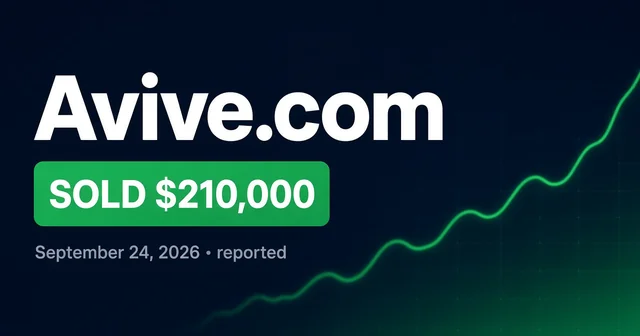
For buyers shopping on platforms like Afternic or reviewing DNJournal sales data, this creates a comp interpretation challenge. A sale at $18,000 on a 24-month LTO is economically different from a $15,000 cash close, but both might appear as "$18K sale" in the public record. I keep a personal discount factor in my analysis when I see LTO-heavy market data — worth doing the same.
Check NameBio where you can, since some sale records indicate payment structure. The gap between LTO-reported and cash-equivalent pricing is one of the quiet distortions in 2026 market data.
What I'd tell a seller deciding between cash and LTO right now
If the cash offer is within 15% of your LTO ask and the buyer looks credible: take the cash. Take it. Clean, fast, no default risk. You own that money the day it clears escrow.
If the cash market is thin on your name — meaning serious inquiries are slow and you're watching hold time accumulate — then LTO is a legitimate tool for unlocking a buyer who genuinely wants the name but can't pay all at once. Set it up properly: upfront deposit, monthly escrow, written agreement, clear default terms.
And price the LTO premium honestly. If your cash price is $12,000, an LTO at $14,400 over 12 months is defensible. Defensible. An LTO at $19,000 over 24 months because you think no one will notice is the kind of thing that generates chargebacks, disputes, and negative broker reputation. People notice.
I'd also look at what you're holding. A strong .com or .app with clear end-user demand — something like AutoFlows.app in the workflow automation space — is the kind of name where both deal structures are realistic because the buyer pool is motivated. A weaker name might only close on LTO terms, which should tell you something about how the market perceives it.
Browse our SaaS domain collection or the full premium inventory if you want to see what well-positioned names look like across both TLD and category. Our domain tools can help you benchmark valuations before you decide which deal structure to target.
Key Takeaways:
- Lease-to-own is now mainstream in premium domain sales — driven by higher buyer cost of capital, improved platform infrastructure, and slower cash close rates across the aftermarket.
- Sellers carry real default risk in LTO deals — a deposit, escrow on every payment, and a signed agreement aren't optional formalities. They're the difference between a slow exit and a clean one.
- Buyers need to read the default terms carefully — some agreements are installment-to-own, others are pure lease. Building a product on a domain you don't fully own yet carries genuine exposure if the seller's situation changes.
- LTO pricing inflates comps — when reading 2026 sales data, account for the fact that installment prices often include a 20–30% premium over equivalent cash value.
- Read the installment deals guide and the escrow guide before you structure your next deal — Domain Name Wire tracks the trend as it evolves.
I don't think cash sales are dying. They're not. I think they're getting more selective. The LTO surge is the market's answer to a moment where buyers want premium names and sellers want premium prices — and neither side wants to blink first on a single wire. Understanding the structure puts you ahead of most people entering this negotiation.