Everyone wants to build the next Sedo until they realize most domain marketplaces die of the same disease: infinite inventory, zero trust, and checkout flows designed in 2009.
I run editorial at DN Detector - a curated marketplace, not a dump-every-CSV-here listing farm. We sell fewer names than the giants, and we sell them faster per listing because context converts. If you're building a domain marketplace in 2026, steal the psychology, not the sitemap.
Why do most domain marketplaces fail to convert?
Because they optimize for quantity when buyers shop for certainty.
A founder wiring $25,000 for a brand isn't browsing ten thousand rows like it's Amazon. They're asking:
- Is this name actually owned by the seller?
- Will transfer work without drama?
- Is the price anchored in reality?
- Does this site look like a scam?
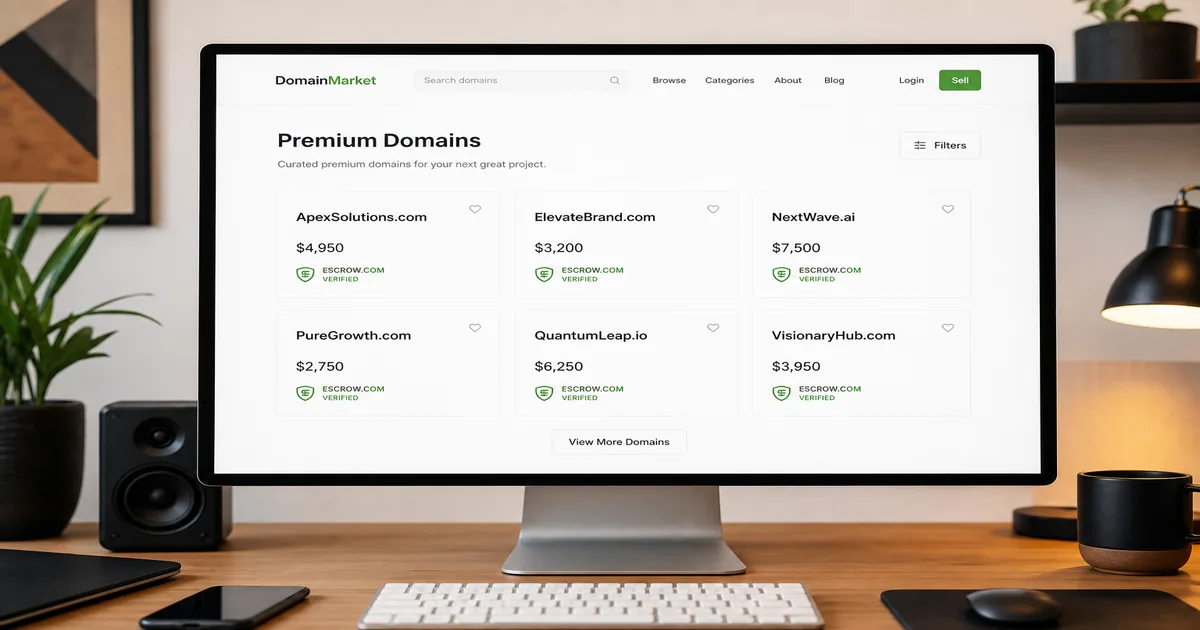
Bulk listings answer none of that. Curated pages with brand story, logo previews, comparable positioning, and escrow badges answer all of it.
Marketplaces that feel like parking page aggregators get parking page conversion rates. Marketplaces that feel like boutique brokerages get broker-grade checks.
What UX patterns actually move premium domains?
After watching hundreds of buyer sessions, these patterns repeat:
1) One name, one story
Each listing should read like a product page, not a spreadsheet row. Tagline, use cases, extension rationale, pronunciation guide if needed. Names like AutoFlows.app sell because buyers instantly see automation + workflow SaaS - not because the string is magic.
2) Price transparency with context
BIN prices scare some buyers; "make offer" wastes time. Pick a strategy per tier. Show why the price is rational - comps, brand assets included, category demand. Silence invites lowballing.
3) Mobile-first trust signals
Founders research domains on phones at midnight. HTTPS, clean typography, real about page, visible escrow path. If your marketplace looks phishable, you'll never collect a wire.
4) Fast paths to human help
Premium sales are high-touch. Chat, scheduled call, or email with SLA. Bots can qualify; humans close.
Study how we structure SaaS category pages - filters that match buyer intent, not investor inventory ego.
How important is escrow to marketplace trust?
Non-negotiable above four figures. Possibly non-negotiable above three.
Escrow isn't a feature - it's the difference between "marketplace" and "Craigslist with WHOIS." Integrate Escrow.com, or route through Sedo/Afternic rails, or build broker-assisted flows. But never imply buyers should "just trust us" with a direct wire.
Our acquisition FAQ exists because even smart founders skip reading transfer steps until panic sets in. Document the choreography: agreement, payment hold, auth code, push/pull, release. Boring copy saves deals.
Trust is the product. Domains are the inventory.
Curation vs bulk listings: which model wins?
Both can work - for different businesses.
Bulk aggregators win on SEO long tail and investor supply. They struggle on conversion per premium name because story doesn't scale automatically.
Curated marketplaces win on average sale price and sales velocity for quality inventory. They struggle on content marketing breadth unless editorial is a core competency.
DN Detector chose curation because I'd rather explain twenty great names than bury five gems in twenty thousand mediocre ones. Our about page is part of the funnel - buyers want to know who's vouching for the list.
If you're launching, pick a lane. Hybrid models often inherit the weaknesses of both: too much noise to feel boutique, too little inventory to win SEO.
What brand context should every listing include?
This is our secret sauce - and it's not secret:
- Positioning line - who the name is for in one sentence.
- Visual identity preview - logo concept, color direction, social avatar mock.
- Startup angles - 2-3 business ideas that make the name feel real.
- Extension rationale - why .app vs .com matters for this string.
- Comparable tone - "sounds like X category leader" without trademark stupidity.
Buyers aren't purchasing ASCII. They're purchasing a head start. Context is how you charge premium without apology.
How do you acquire inventory that matches the brand?
Registries won't hand you quality. You source:
- Registrar drops with clean history.
- Direct outreach to undeveloped gems.
- Portfolio buys from retiring investors.
- Your own registrations when retail pricing allows.
Then you cut ruthlessly. If a name needs three paragraphs to justify pronunciation, it doesn't make a curated marketplace. List it elsewhere.
Browse live inventory to see the bar we enforce - short, credible extensions, commercial categories, assets included.
What would DN Detector do differently if starting today?
Honestly? Even more editorial.
Search is crowded. Trust is scarce. Articles like this one - market analysis, founder guides, policy explainers - pull in buyers who didn't know they were shopping yet. Pair content with specific listings and you get intent, not bounce.
I'd also invest earlier in:
- Structured data for listings (Product, Offer, FAQ).
- Buyer CRM - premium sales are relationships.
- Renewal ops - curated means you eat the carry cost.
- Category landing pages that mirror how founders think (AI, SaaS, fintech), not how registries classify strings.
And I'd still say no to becoming a CSV graveyard. The internet has enough of those.
Building a marketplace is easy. Building one that sells premium names without smelling like a scam is hard.
Start with fewer names, better pages, and escrow everywhere - then scale the hard part: editorial trust. More playbooks live on our blog if you're still drafting your MVP spec.
How should a new marketplace handle SEO without looking spammy?
Programmatic SEO killed a generation of thin affiliate sites. Domain marketplaces face the same trap - thousands of near-duplicate landing pages with one paragraph and a buy button.
Better play: category hubs with editorial intros, featured collections, and deep dives on a subset of names. Let long-tail capture happen through articles that teach, not pages that scrape.
Internal linking should mirror buyer journeys: blog analysis → category page → specific listing → FAQ → contact. That's how you earn links and keep crawl budget on pages that convert.
What metrics actually matter for marketplace operators?
Vanity traffic is useless. Track inquiry rate per listing, median time-to-close, escrow completion rate, and renewal coverage on owned inventory. If inquiries are high and closes are low, your pricing or story is off - not your ads.
Curated shops run smaller top-of-funnel numbers with higher average order value. Plan unit economics accordingly. DN Detector optimizes for qualified buyers, not raw pageviews. Afternic optimizes for distribution breadth. Both can work. Mixing the models without clarity burns cash.
What role does editorial content play in marketplace sales?
Articles attract buyers who didn't know they were shopping. Policy explainers, sale breakdowns, and founder guides build E-E-A-T - the same signals Google wants for AdSense and organic rankings. Every piece should link to real inventory, not float in a content vacuum.
We treat the blog as top-of-funnel for the catalog. If you're building a competitor, copy that wiring: insight first, listing second, escrow button third. Content without commerce is a media company. Commerce without content is a parking lot.
- DN Detector editorial